

Vocal Totality: Technical Analysis of Trevor Wishart’s Globalalia
A study on «extended vocality» and the Composers Desktop Project (CDP). This article explores how digital signal processing transforms 26 global languages into a universal electroacoustic «gesture of speech» and unique sonorous objects.
ELECTROACOUSTICS MAGAZINE ARTICLESARCHIVAL REVIEWSOUND RESEARCH
Romina Daniele
10/3/20116 min read
Online Journal Title: ElectroAcoustics Magazine
Print Series Destination: Arts & Technologies (Annual Print Selection · Historical Appendix)
Classification / Category: Archival Series · Legacy Collection (2011–2012)
Article Identifier: Art. 2026.L13.en
Publishing Model: Historical Archive Contribution (Not Subject to Prior Peer Review)
Publication Context: Issue #01: «The Electroacoustic Imperative» (2026) – Historical Appendix
Indexing & Registrations
ISSN (Online): Application in Progress
ISBN (Print): Reserved for Arts & Technologies 2027
DOI: Pre-assigned (eam.2026.L13.en)
Original Publication Date: October 2, 2011 on Electro-Acoustics.org (Milan legacy edition of this journal)
📥 PDF (ITA) | PDF (ENG)
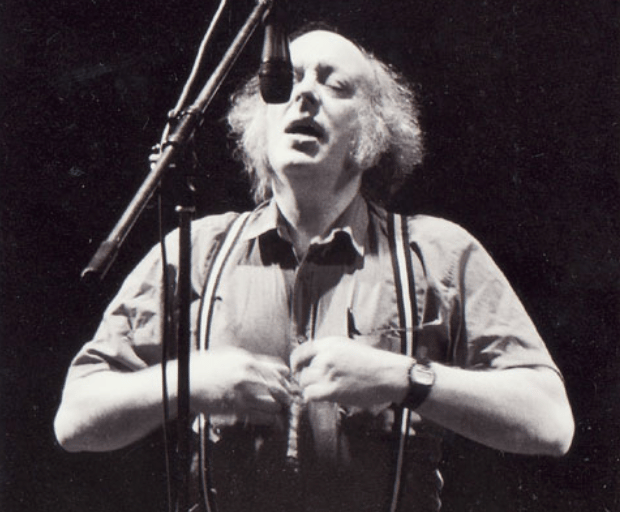
Following the line of study and research undertaken by the composer since the 1970s — focused on electroacoustic composition based on the relationship between human vocality and technologies (analog first, then digital) and on vocality itself as «extended vocality» — the specific qualities of the voice represent the basis for the organizational development of the material in this recent Wishartian masterpiece. We had the opportunity to listen to it in the presence of its author not long ago, attending his personal presentation [2].
The composer examined the unique qualities inherent to each individual and vocal subject, such as pitch, rhythm, tempo, and speed, giving rise to a «gesture of speech» independent of intelligibility and entirely sonorous. The extraction of certain intrinsic sonorities occurs through recording, followed by the selection of specific types of musicality; thus, the composer committed to combining sounds harmoniously and generating sensations of pitch through particular syllabic combinations. Similarly, he worked on the sensation of noise and the noise-like nuances proper to every voice—when a voice changes tone, is interspersed with a breath or sigh, or suddenly changes pitch or mood.
The concept of the «uniqueness» (unity) of the electroacoustic work asserts itself increasingly throughout Trevor Wishart’s production, from Red Bird through the Vox Cycle to more recent works, and particularly in Globalalia [2]. Here, uniqueness is understood as the foundation of the sonic work of art — not in the improvisational or performative sense where it will never repeat in the same way, but rather in the sense of fixed and processed matter. Its existence in a specific, unique form (the fruit of compositional work) coincides with that of the technological medium. In this regard, we recall the statement by Denis Smalley: «The strength of electroacoustic music lies in the fact that it, unlike traditional Western music, cannot undergo reduction to a notation system, thus avoiding the danger that musical writing might be considered a separate entity, a substitute for the perceptual experience... The intuitive knowledge of the physical human gesture involved is inextricably linked to our knowledge of music as an activity» [3].
In this sense, the electroacoustic uniqueness of Trevor Wishart finds its emblem in Globalalia (2003–2004), a title that is the author's neologism combining the adjective «global» with the noun «glossolalia», presenting «the universal dance of human language, as revealed in the twenty stories from everywhere, spoken in language» [4].
The 29-minute piece is based on syllables drawn «from almost all the languages of the world" and their structural combination through the computer to extract their intrinsic musicality. The selection of the 8,300 recorded sounds took place on several levels: based on the qualities of different voices and languages captured in specific moments (pitch, rhythm, tempo, speed); the various modes of the speakers in relation to the characteristics of the languages and personalities; and the specific properties of the utterance fragments. The selection occurred through a cataloging process performed within the Composer’s Desktop Project (CDP) — a program developed by the composer [5] — and the development of the material refers, within Wishart’s mythical conception, to the narrative apparatus of the Thousand and One Nights.
In a general consideration of Trevor Wishart's work, the composition reaches the representative and metaphorical heights of what the author defines as «discursive gesture», with direct reference to the sonorities of language (any language) emancipated from any signification. This is the direct link between the Vox cycle, and its mythical condition, and this latest work regarding a discourse on language and speech. From nature to the voice, to the voice-nature of the early works up to the Vox Cycle, to the known characters of subsequent compositions, to the voice of everyone and no one in Globalalia. Specifically, these stages of Wishart’s work can be referred to respectively as: Red Bird, Anticredos and Vox Cycle, Two Women, and Globalalia [1]. We specify that Red Bird and Anticredos constituted important milestones; the former for the development of specific sound transformation processes (analog then, later ported to digital and perfected in the Vox cycle, particularly the fifth movement); the latter for the development of a compositional and notational approach for vocal ensemble and the relationship between natural/urban sounds and the human voice.
The identification of two particularly strong moments, Vox Cycle and Globalalia, is immediate. Where in the Vox Cycle all sound research is combined with a structured vision of a vocal ensemble and natural sounds with multiple ramifications, in Globalalia this persists, but the «imaginary discourse»—based on the articulation of meaningless syllables—leaves the field. The para-syllabic articulation that constitutes the fundamental line of the Vox cycle movements gives way to the para-linguistic discourse par excellence, whose construction follows no line other than the musical discourse itself, representing the vocal whole beyond any pre-constituted ensemble or extended vocal technique.
It is a vision in which all languages are annulled into pure sonorities that unite the social group beyond all limits, just as languages divide individuals to opposite extremes. In this electroacoustic space, man is one with the group, just as in the space of the world, what various groups have in common is the inability to communicate through languages. This is why, in all types of interpolation — a technique fundamental to Wishart’s entire production — it is always between the voice and something else natural in the world. Specifically, the transition from the extended voice beyond any language to a «global» voice highlights the duality at the base of Wishart’s approach to vocality. This refers to the dialectical relationship between composition and performance [2] — between the first-person improvisation/recording of vocal sounds and the actual composition via montage and electroacoustic processing.
Unlike the Vox Cycle, which (with the exception of the final movement) required notation for ensemble performance, Globalalia has no such need other than the recording of the speakers' voices; hence its character as an emblem of electroacoustic unity. In the studio, the composer catalogs voices as he would sounds. In line with Vox, Globalalia denies the existence of choral group unity outside the constituent process of the work itself. The dismantling of vocal references becomes the pretext through which the composer asserts his presence as a creator. As the composer states, starting from the Vox Cycle, he became interested in «what it means to be human and therefore what the human voice means» [7]. It is the power of the individual; and in the objectification of that power — within the global flow of sonic language — it is the authorial will with its own language that gives rise to the electroacoustic composition.
It is possible, in this sense, to create a schema — the catalog at the base of Globalalia — referring to «super-linguistic» sonic properties, to be read by detaching the designs (the syllables) from their relationship with language.
Related Articles
Marranini, L., & Daniele, R. (2011). LIVING VOICE, Research Report: Trevor Wishart & Extended Vocality in Venice. ElectroAcoustics Magazine / Arts & Technologies Archive. Available at: https://rdmrecords.com/living-voice
Notes & Bibliography
Wishart, T. Official Discography and Research Index. Available at: [http://www.trevorwishart.co.uk/publ_rec.html]
Wishart, T. Workshop at Cini Foundation, Venice. Promoted by the Institute of Living Voice (Belgium), October 2010.
Smalley, D. (1995). «Spectromorphology: Explaining Sound-Forms», in L. Poissant (ed.), Esthetics of Media Arts, Vol. 2, pp. 125-164; Ars Sonora, No. 8, Paris. [tr. it.: «La spettromorfologia, una spiegazione delle forme del suono», in Musica/Realtà, Year XVIII, No. 50, LIM, July 1996, p. 125].
Wishart, T. Globalalia. Liner notes documentation.
Composers Desktop Project (CDP). Official technical documentation. Available at: [http://www.composersdesktop.com]
Wishart, T. (1973–77). Euphonie d'Or, Bourges Festival; Red Bird / Anticredos, CD, UK, October Music, 1992.
Wishart, T. Interview conducted by the London Sinfonietta (2009.01.01). Archived in London Sinfonietta Records. Available at: http://www.londonsinfonietta.org.uk/lsfaudio/london-sinfonietta-podcast-6-trevor-wishart
Trevor Wishart – Globalalia and the Concept of Electroacoustic Unity
Commissioned by Folkmar Hein and awarded at the Berlin Inventionen in 2004, this 29-minute composition is based on the electroacoustic use of syllables taken from 26 different languages. Originally available on DVD, it is now available on CD within the release 3 Compositions (Flying Swimming, 2010, fs00005); the other two compositions included are by Rashad Becker and Haswell & Hecker [1].
How to Cite this Essay
APA 7th Edition: Daniele, Romina. (2012 / 2026). Vocal Totality: Technical Analysis of Trevor Wishart’s Globalalia. ElectroAcoustics Magazine (Historical Archive Contribution), Issue #01 «The Electroacoustic Imperative», Vol. 1 (Selected for Print Edition · Historical Appendix), RDM Records, Art. 2026.L13.en. DOI: Pre-assigned (eam.2026.L13.en). Available at: https://rdmrecords.com/globalalia-di-trevor-wishart
RDM RECORDS IS A FLORIDA-REGISTERED DBA OF ROMINA DANIELE, OPERATING AS A RECORD LABEL AND BOOK PUBLISHER FOR RDM ROMINA DANIELE MUSIC, A BMI-AFFILIATED MUSIC PUBLISHER.
[CATALOG] — [ABOUT] — [PRESS] — [MAGAZINE] - [CONTACT]
TERMS & POLICIES: © 2010–2026 RDM RECORDS. ALL RIGHTS RESERVED.
ALL TEXTUAL, MUSICOLOGICAL, AND AUDIO CONTENT IS PROTECTED UNDER INTERNATIONAL INTELLECTUAL PROPERTY LAWS. DATA SUBMITTED VIA OUR PORTALS IS PROCESSED STRICTLY FOR INTERNAL INSTITUTIONAL COMMUNICATION.THIS INDEPENDENT INSTITUTIONAL LABEL IS DEDICATED TO PURE PHENOMENOLOGICAL, VOCAL, AND SONIC RESEARCH, AND MAINTAINS A STRICT POLICY OF COMPLETE DETACHMENT FROM ALL FORMS OF BLASPHEMY, EXPLICIT THEMES, OR PROFANE PERFORMANCES, SYSTEMATICALLY EXCLUDING THEM FROM ITS CATALOG AND SCOPE.


Get in touch